Commercial Sanitation Services
Commercial hygiene experts located in Brampton ensure restaurants, food distribution facilities, bakeries, warehouses, and mobile food units in compliance. They treat frequently handled areas, food-contact areas, equipment, floors, drains, restrooms, and preparation zones using approved sanitizers, at proper strength, and using documented contact periods.
Essential Summary
- Food safety cleaning experts in Brampton cater to restaurants, grocery departments, commissaries, warehouses, bakeries, schools, mobile vendors, and allergen-sensitive operations.
- Cross-contamination reduction is achieved by treating high-touch surfaces, food-contact equipment, kitchens, floors, drains, restrooms, and storage areas with sectional methods.
- Approved sanitizer dilution, compatibility, and exposure duration are checked by approved providers, with finalization logged via tests, audits, and action records.
- Regular, recurring, and annual duties allocated by location make up sanitation plans built on danger, production rate, changeovers, accidents, and guidelines.
- Suppliers need to demonstrate HACCP, public-health expertise, WHMIS instruction, insurance, endorsements, colour-coded equipment, and audit-ready maintenance files.
What Brampton Facilities Require Food Safety Cleaning?
You must adhere to food safety cleaning if your operation is covered by health inspections, food codes, or HACCP protocols. This covers eateries, dining areas, supply warehouses, retail departments, meat counters, fish departments, general stores, and facility-based kitchens.
You also need compliant food safety cleaning in distribution centers, food processing plants, freezer facilities, commercial bakeries, educational nutrition programs, event spaces, and catering hubs. Temporary and mobile establishments count too, including food trucks, event vendors, and temporary booths. If your staff handle ingredients, section prepared foods, heat finished items, or keep allergens stored, your facility needs established sanitation documentation. In Brampton, food safety isn't voluntary; it's part of regulatory, business, and safety compliance.
What Do Brampton Cleaning Professionals Handle?
You need skilled cleaning experts who disinfect high-touch surfaces, cooking areas, floor areas, and restroom facilities to ensure compliance with food safety and health standards. These locations are prioritized because they carry the greatest contamination risk, slip and fall dangers, and health code violations.
If you grasp what they sanitize, you'll be able to confirm your facility meets all operational and regulatory compliance needs.
High-Touch Surface Sanitizing
base disinfection timing based on traffic, contamination risk, and operational use.
in cases where outcomes are above target limits. Additionally, they prevent cross-contact by rotating wipes, using directional cleaning patterns
Food Prep Areas, Flooring, and Sanitary Facilities
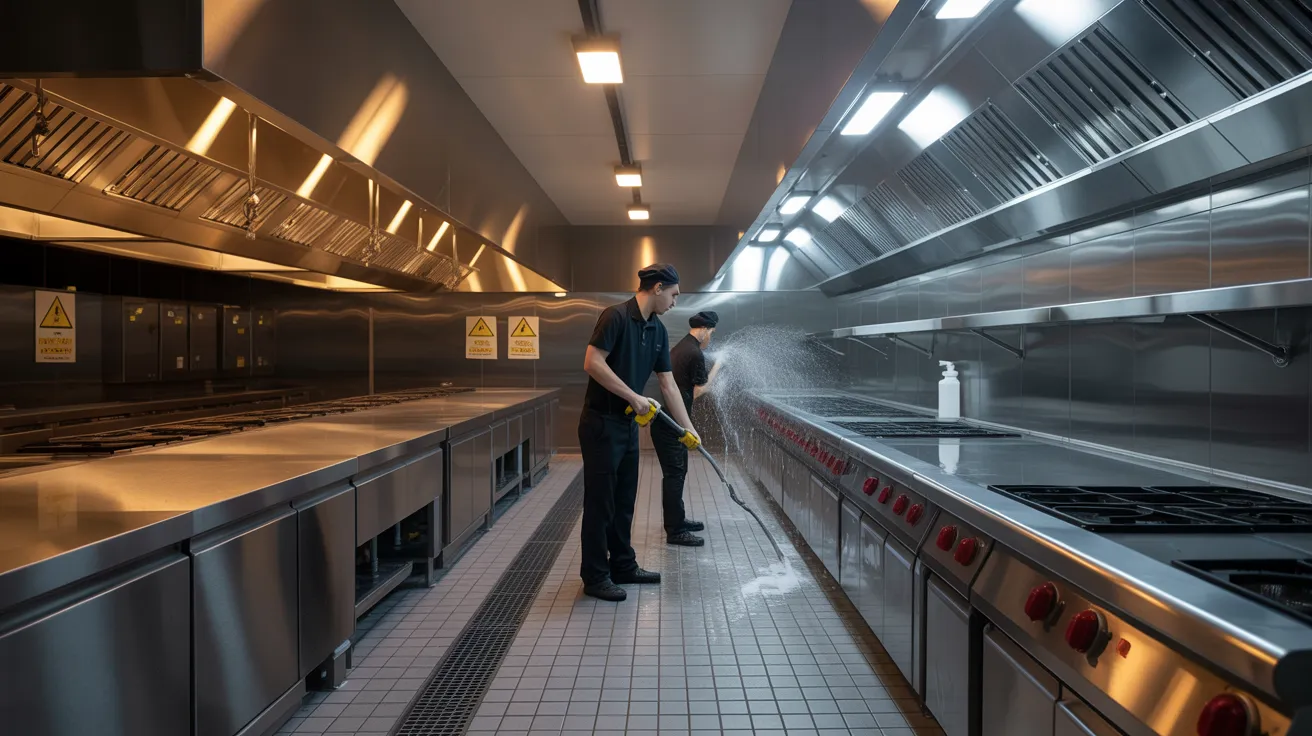
Expect Brampton cleaning experts to target kitchens, floors, and restrooms because each area carries distinct food safety, slip-and-fall, and public health risks. In industrial kitchens, you need grease removal from cooking stations, appliance surfaces, drain systems, preparation areas, and backsplashes to reduce contamination and pest pressure.
Documented floor care is likewise provided as part of the service.
In restrooms, cleaners treat touchpoints, fixtures, partitions, dispensers, and waste containers then restock supplies and control odours. They also maintain restaurant cleaning supply rooms where product storage, sink cleanliness, and drain systems impact daily sanitation standards and worker protection.
How Food Safety Cleaning Benefits Brampton Operations
Brampton businesses need to implement proper sanitation practices for satisfying legal standards and obtaining approval. You also minimize bacterial spread through proper cleaning of food-preparation surfaces, appliances, and frequently-touched items. Most importantly, you safeguard community wellness by reducing the chance of food poisoning in your establishment.
Food Safety Regulations
Since Brampton food businesses must follow stringent health requirements, your sanitation practices directly determines your capacity to satisfy health codes, defend diners, and prevent regulatory penalties. You must maintain clean food preparation areas, written maintenance records, proper chemical use, and auditable operational standards that meet municipal and provincial inspection expectations.
Thorough sanitation enables cross-contamination prevention by reducing particles on mutual appliances and regularly touched locations.
Cross-Contamination Prevention
Meeting regulatory requirements also depends on your capacity to stop cross-contamination during daily food handling and cleaning. You must separate raw ingredients from ready-to-eat foods, sanitize prep surfaces between tasks, and keep cleaning products separate from food areas. Established guidelines minimize contamination chances and support consistent compliance during inspections.
You might establish allergen separation to stop main allergens from reaching common areas, containers, or machinery. Use dedicated cutting boards, color-coded tools, and strict utensil labeling so staff don't mix items throughout cooking or delivery. Mandate handwashing after handling uncooked meat, fish, egg products, or allergens. Change wiping cloths regularly, and check sanitizer strength with test strips. When employees learn these procedures each shift, you develop a more sanitary, secure business that matches Brampton's safety requirements every day.
Community Health Protection
If proper sanitation declines, you don't merely face potential inspection issues—you boost the probability of foodborne illness harming customers, staff, and the broader Brampton region. You also weaken your role in protecting public health, especially in high-traffic food premises where contamination can spread quickly through surfaces, equipment, and touchpoints.
You require sanitation systems that remove contaminants, sanitize effectively, and confirm results. This requires following contact periods, using authorized sanitizers, documenting procedures, and coaching employees to satisfy health-unit expectations. These controls promote illness spread by decreasing microbial counts before contaminating food or hands. Throughout Brampton, strong cleaning safeguards susceptible populations, minimizes disease potential, and demonstrates your diligence. When you follow proper protocols, you go beyond requirements—you mitigate risk and enable safer food service region-wide.
How Can Cleaning Practices Ensure Food Safety Compliance?
Maintaining rigorous cleaning routines ensures food safety compliance by lowering contamination exposure, limiting pathogen development, and keeping your facility meeting sanitation requirements under HACCP-based programs and public health regulations. You ensure that food-contact surfaces appear visibly clean and microbiologically controlled, supporting documented preventive controls and inspection readiness.
Cleaning programs additionally bolster allergen management by clearing residues that can cause undeclared allergen exposure.
Determining When to Plan Commercial Cleaning
build up harmful substances. Raise frequency
Schedule drain systems, vents, storage racks, and difficult-to-access zones weekly or every month, relying on inspection findings and sanitation records.
Finding Quality Brampton Cleaning Experts: A Guide
Begin by evaluating providers based on sanitation compliance standards—not solely on budget. You should confirm that each organization comprehends CFIA, public health, and HACCP-aligned expectations applicable to your facility. Request insurance certificates, WHMIS compliance, staff training documentation, and oversight procedures. Assess whether technicians recognize cross-contamination risks, chemical handling protocols, and verifiable sanitation records.
You should also assess business dependability and accountability. Request references from food facilities in Brampton, then examine turnaround periods, corrective-action procedures, and communication related information standards. Confirm the company supports supplier audits and can present inspection-ready documentation when regulators or third parties request evidence. Check whether equipment is maintained is performed, colour-coded tools are used appropriately, and site-specific hazards are recognized. A competent service protects compliance, product integrity, and your brand reputation.
What does a cleaning and sanitation plan consist of?
Create a written plan that defines every sanitation duty, guideline, and expectation before production starts. You should list cleaning schedules, authorized products, mixing ratios, exposure periods, equipment, and testing procedures for each area, section, and machine. Be sure to include pre-operational inspections, corrective actions, and employee training requirements.
Your program should also cover cross-contamination controls, waste handling, pest-prevention measures, and documented schedules for bathrooms, drainage systems, surfaces, and food-preparation zones. Explain how you'll keep raw and prepared foods apart, support ingredient tracking, and maintain accurate allergen labeling through validated cleaning between product changes. You should designate accountability, keep signed records, and review results against regulatory standards, HACCP controls, and customer requirements. When gaps appear, update procedures immediately and retrain staff.
Regular Posed Inquiries
Will sanitation providers handle nighttime hours at Brampton facilities?
Yes, you can set up cleaning services to manage nighttime operations in Brampton facilities. You'll arrange nighttime cleaning around operational windows, access requirements, and staffing levels. Providers generally establish overnight procedures to prevent disruption, copyright compliance, and log completed work. You should confirm timeframes, management, access procedures, and waste management before service starts.
Do sanitation professionals provide hazard containment services?
Yes, you can expect Brampton cleaning experts who provide emergency spill response services. They handle contamination, evaluate dangers, contain contamination, and begin swift cleanup to minimize risk and avoid operational disruption. You should verify arrival timeframes, professional credentials, safety procedures, and waste management. If your facility must comply with industry standards, select a service that records events, follows compliant standards, and supports audit readiness.
Are green disinfectants suitable for food preparation areas?
Definitely, natural disinfectants work safely on food preparation areas if you purchase disinfectants approved for food contact that adhere to regulatory compliant. You need to verify exposure duration, concentration levels, and rinse protocols before use. Plant-derived products lower harsh chemical exposure, but you should obtain confirmation of performance against target microorganisms. To maintain residue-free conditions, stick to manufacturer instructions exactly and confirm your sanitizer satisfies food sanitation requirements.
Can cleaning plans be customized for seasonal production changes?
Yes, you can modify cleaning schedules for seasonal production changes. You should modify timing, labor allocation, disinfectants, and confirmation procedures to fit operational cycles while sustaining regulatory compliance. You'll minimize equipment downtime by planning disinfection around production shifts, maximum output, and operational patterns. You should further modify standard operating procedures, training, and environmental monitoring to account for transient threats, new allergens, or elevated soil levels. Regular reviews maintain your program functional.
Do commercial cleaners educate employees on hygiene standards?
Absolutely, professional cleaning companies regularly deliver staff training on sanitation best practices. Your staff gets instruction on correct chemical handling, contact times, cross-contamination prevention, machine takedown, and paperwork. They typically align instruction with HACCP, GMP, and CFIA or regional health authority standards. Many also perform sanitation audits to verify compliance, identify gaps, and strengthen corrective measures. This enables you to sustain consistent procedures, clear audits, and lower contamination dangers routinely.
Summary
Through working with Brampton commercial cleaning and food safety specialists, you accomplish much beyond organizing—you ensure your facility for inspections and your procedures stay aligned with regulations. From kitchen spaces to processing areas, all maintained surfaces and organized zones reduce contamination risks and avoid major losses. Through scheduling maintenance at proper intervals and adhering to a comprehensive cleaning program, you safeguard employees, clients, and your standing. Within strict regulatory frameworks, proper sanitation must be a priority—they represent good business practice.